
DGFS SCIENTIFIC AWARD

The Wilhelm von Humboldt Award for Early Career Researchers recognizes excellent work by scholars at an early career stage and honours innovative contributions to linguistic research.
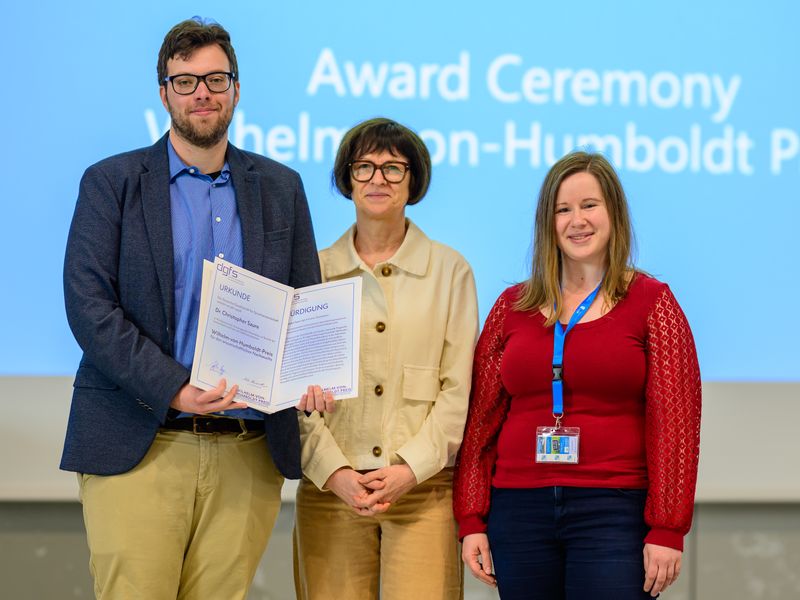
Christopher Saure (University of Wuppertal)
On the Interpretation of Perspective-dependent Expressions in the Complement Clauses of Propositional Attitude Verb
Christopher Saure’s dissertation, which was written as part of CRC 1252 Prominence in Language at the Bergische Universität Wuppertal, is situated at the interface between syntax, semantics, pragmatics and narratology. Using experimental methods, he shows that common assumptions about perspective-taking in indirect speech are untenable, and provides the first demonstration that, for a substantial class of temporal-deictic expressions in embedded clauses, interpretations from the perspective of the matrix subject are in principle available. On the theoretical side, his analysis of the conditions under which such interpretations are available is startlingly simple, enlightening and well grounded in theory. Overall, the work is impressive for its extremely successful combination of theoretical analysis, experimental empirical evidence and insightful, detailed argumentation. It promises to be a crucial reference for future research on perspective-taking.
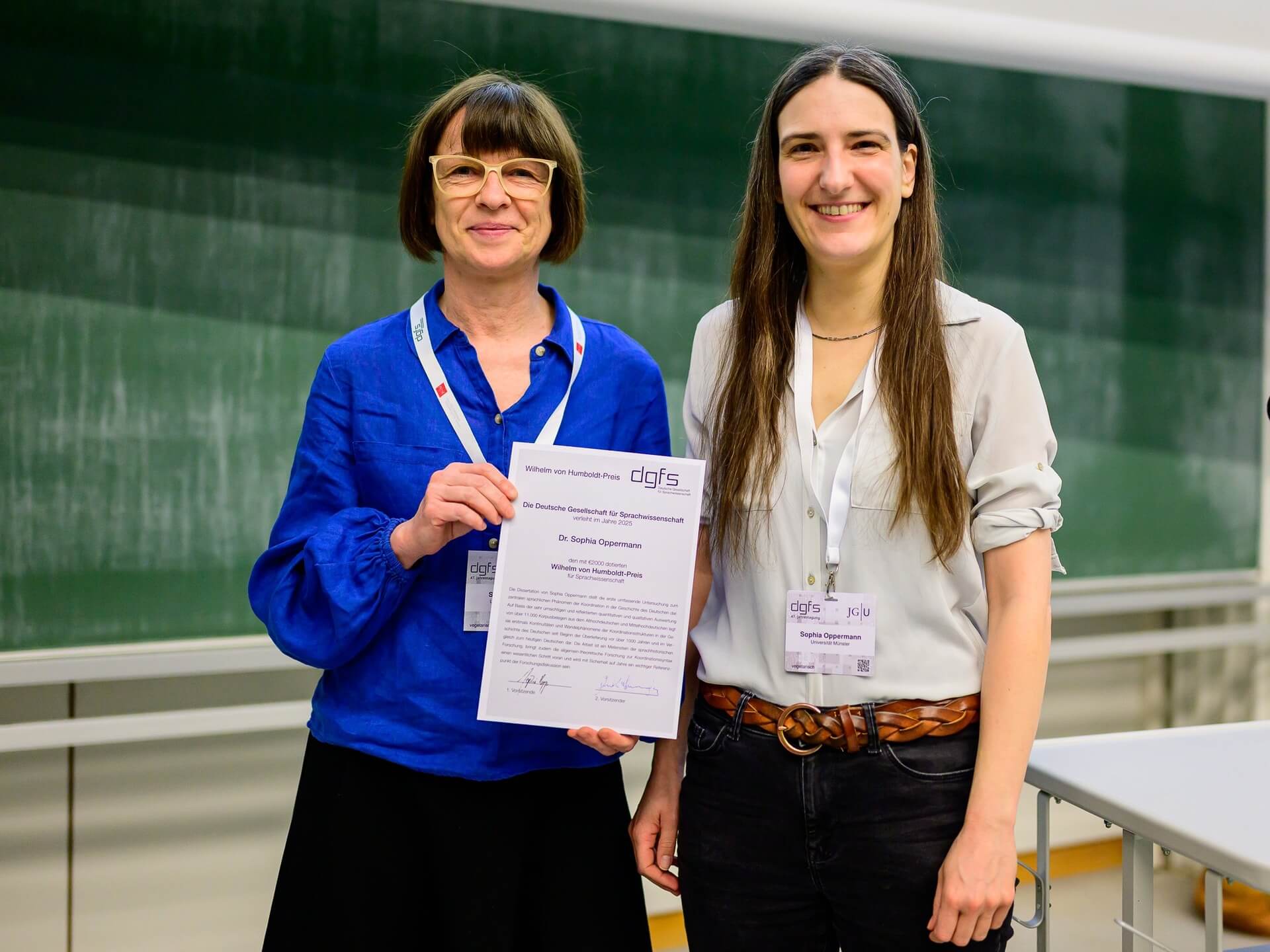
Sophia Oppermann (University of Jena)
Coordination Structures in Old High German and Middle High German
Sophia Oppermann’s dissertation, completed at the University of Jena, constitutes the first comprehensive investigation of the key linguistic phenomenon of coordination in the history of German. On the basis of a careful, considered quantitative and qualitative evaluation of over 11,000 corpus examples from Old and Middle High German, she demonstrates both continuity and change in coordination structures in the history of German since the earliest textual evidence over a thousand years ago, in comparison to present-day German. As well as being a milestone in historical linguistic research, the dissertation also advances our general theoretical understanding of the syntax of coordination, and is certain to be an important reference point as regards the state of the art for years to come.
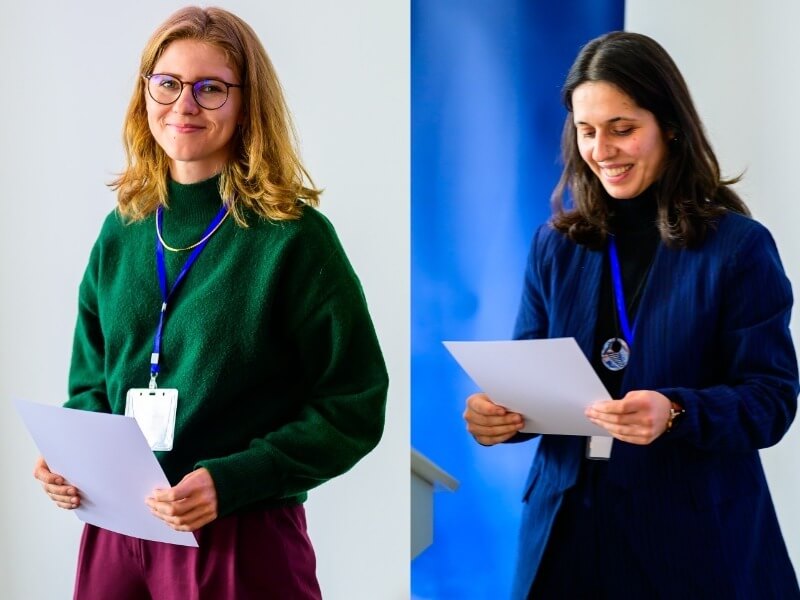
Aleksandra Ćwiek (ZAS/Humboldt University of Berlin)
Iconicity in Language and Speech
and
Semra Kizilkaya (University of Cologne)
Marking changes. Affectedness at the syntax-semantics interface
In 2024 the DGfS was once again able to bestow two Wilhelm von Humboldt Awards for Early Career Researchers.
While linguistics has traditionally emphasized the arbitrariness of human language, nowadays there is increased interest in the iconicity of signs, i.e. how motivated they are by what they signify. In her dissertation, Aleksandra Ćwiek investigates various aspects of iconicity on a variety of linguistic levels using corpus-linguistic and experimental methods: in the texts of German children’s books that paint pictures using linguistic expressions; in the phonetic art of the invented names of Pokémon; and in the relation between deictic gestures in vertical space and the height of tones in spoken language. The work is vividly and engagingly written. In addition to her dissertation, Aleksandra Ćwiek is first author on a substantial study that demonstrates effects of iconicity in 28 languages; the study attracted international media attention. Her work deserves the Wilhelm von Humboldt Award for its creative research ideas, its rigorous methodological operationalization of these ideas, its analytical precision and her ability to generate enthusiasm in others for a controversial area of research.
Semra Kizilkaya‘s dissertation deals in detail with “affectedness”, a term that is often used but that has remained theoretically nebulous. Kizilkaya provides the term with an independently developed, agenda-setting definition, according to which affectedness is a dynamic event that can be conceptualized in terms of three different sub-events: a causal, a procedural and a resultative event. She deftly embeds this in a formal syntactic model that permits her to formulate clear predictions, using this to test the conditions for Turkish Differential Object Marking (DOM) in two well-planned and well-executed experiments. Kizilkaya’s dissertation provides an excellent demonstration of how typological observations, theoretical modelling and experimental application can lead to impressive advances in our understanding of fundamental linguistic categories such as affectedness.
Maria Bardají i Farré (University of Cologne)
Nominalization in Totoli and in other western Austronesian languages
and
Aikaterini Lida Kalouli (University of Konstanz)
Hy-NLI: a Hybrid system for state-of-the-art Natural Language Inference
In 2023 the DGfS was able to bestow two Wilhelm von Humboldt Awards for Early Career Researchers.
Maria Bardají i Farré‘s dissertation deals with forms and functions of nominalization in the western Austronesian language Totoli. It stands out for its unusual combination of excellent fieldwork and corpus research with excellent theoretical and typological discussion and analysis. Virtually everything needed to be discovered and described from scratch, as no descriptions of nominalization constructions existed either for Totoli or for its neighbouring languages. The work deserves the Wilhelm von Humboldt Award because it is courageous and innovative, substantially expanding our knowledge and understanding of languages and language.
Aikaterini-Lida Kalouli‘s dissertation deals with current problems in Natural Language Understanding (NLU), in particular the problem of how machines can be made to draw logical conclusions, i.e. Natural Language Inferencing (NLI). Current research shows that modern language models can indirectly illustrate a broad range of world knowledge, but that they continue to fail at the actual problem of drawing logical conclusions. In her dissertation, Kalouli develops a pathbreaking hybrid approach by combining an independently-developed, rule-based semantic parser and combines these classic AI methods with a standard language model. This hybrid system delivers competitive results, and attests to a combination of knowledge and abilities that has become rare in the world of machine learning: an integration of deep linguistic knowledge on the one hand with advanced mathematical and programming abilities on the other. Kalouli combines these in an exemplary and trend-setting manner.
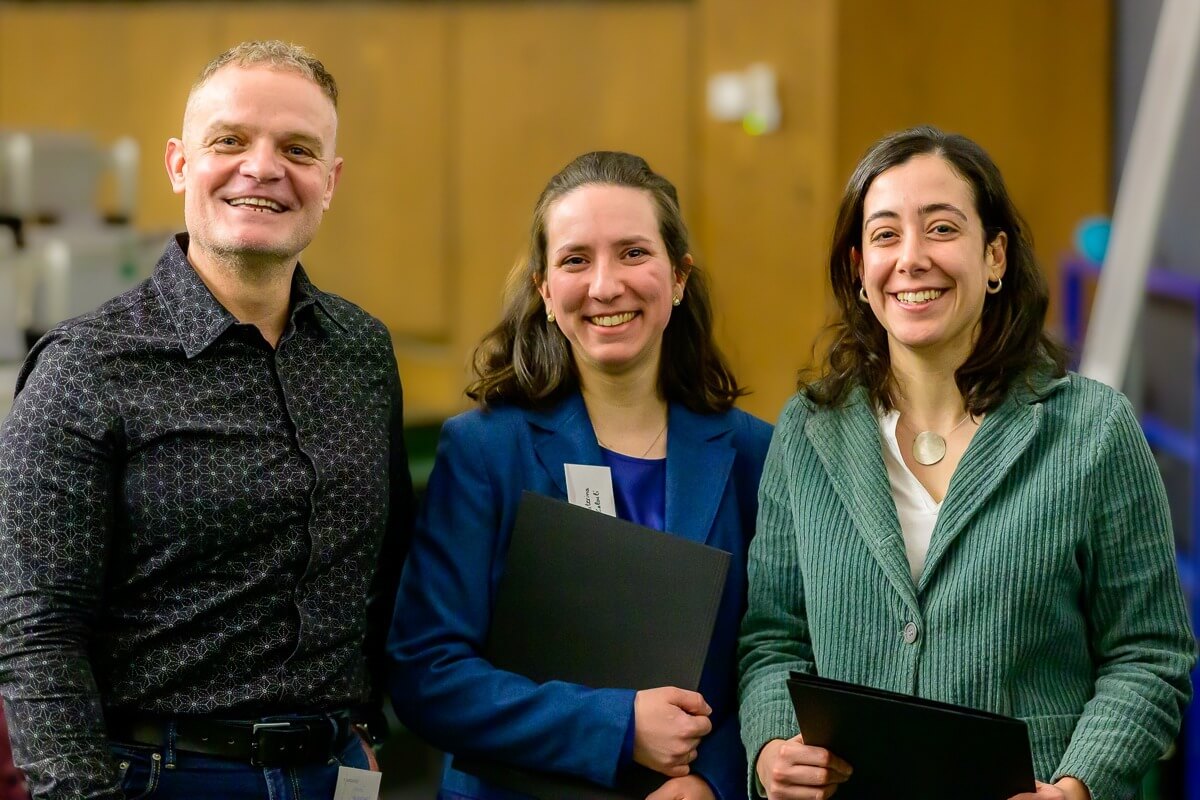
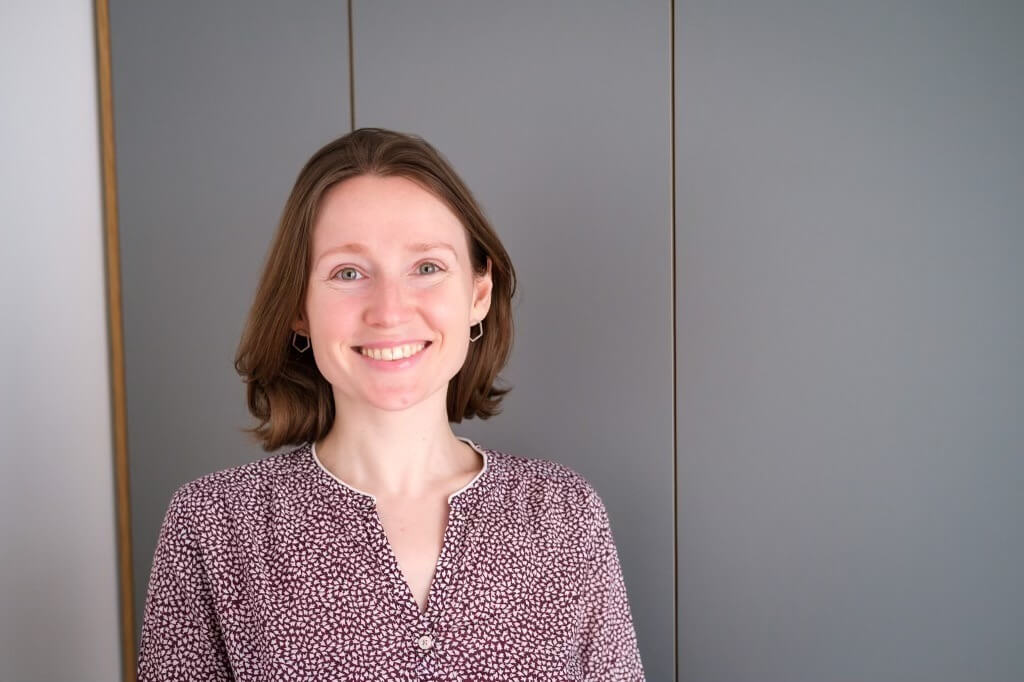
Katja Laptieva (University of Mannheim)
Wenn Argumente keine Argumente sind. Eine korpusbasierte Modifikatoranalyse der atelischen an-Konstruktion [When arguments are not arguments: a corpus-based modification analysis of the atelic an construction]
Katja Laptieva’s very clearly structured and erudite dissertation deals with the atelic an construction in German. She demonstrates in an exemplary fashion how carefully-collected quantitative data can be used to overturn proposed empirical claims, and then to proceed far beyond descriptive generalizations to a new explanatory formal semantic theory of a frequently investigated phenomenon. The dissertation is also an exciting read, challenging the reader to identify counterevidence by virtue of its explicitness, and opens up a variety of further research questions.
Tyll Robin Lemke (Saarland University)
Experimental investigations on the syntax and usage of fragments
Tyll Robin Lemke’s dissertation convincingly combines expertise in grammatical theory with acceptability studies. It presents an original synthesis of information structure with information density in order to assess theoretical approaches to fragments. The jury was particularly impressed with the discussion of the use of ellipsis in German, informed by targeted experiments and motivated by considerations of information theory.
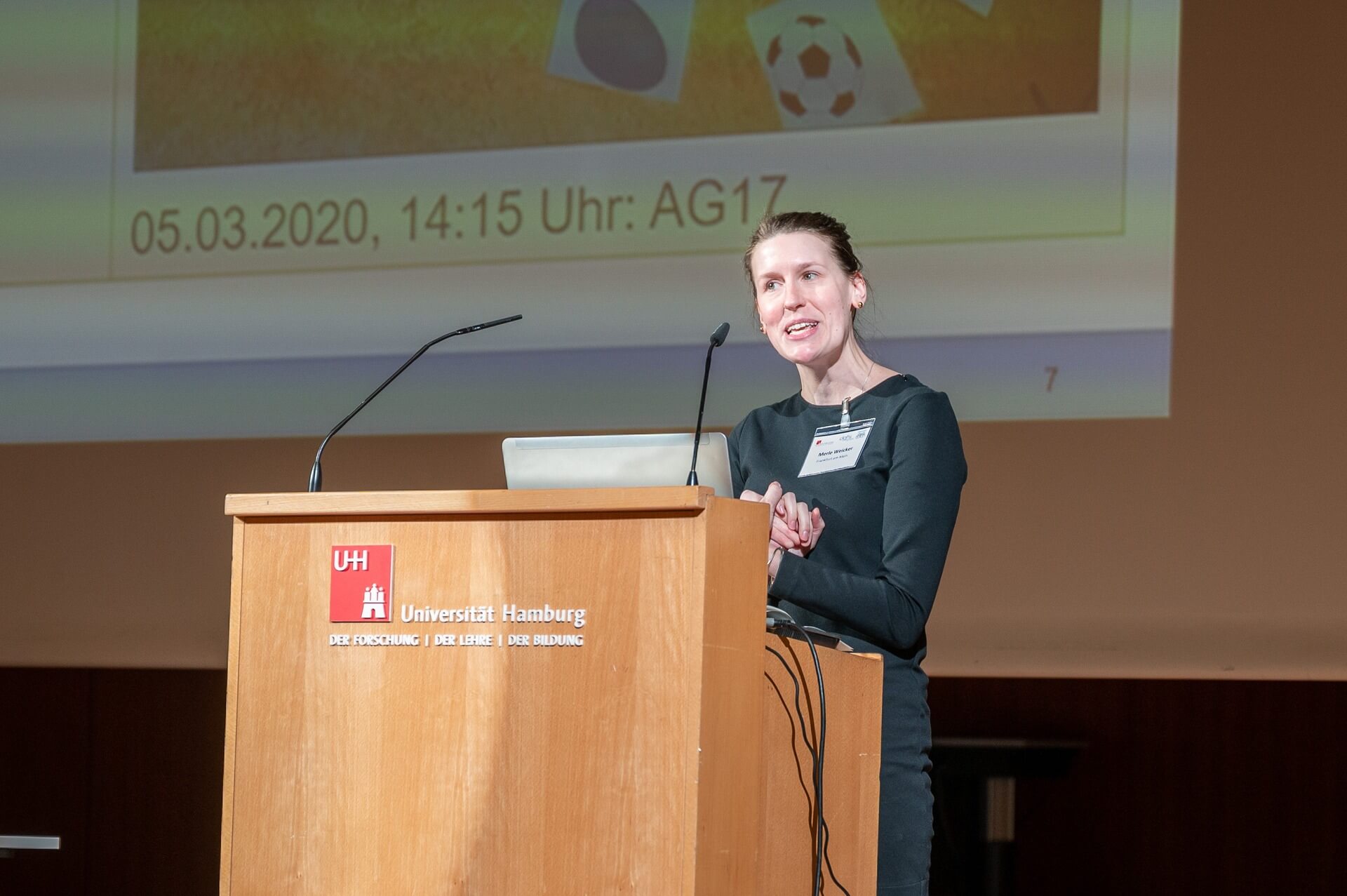
Merle Weicker (Goethe University Frankfurt)
The role of semantic complexity for the acquisition of adjectives
Merle Weicker’s dissertation is a particularly original combination of semantic theory and studies of lexical acquisition. Weicker’s proposal of a semantic complexity hierarchy for adjectives is especially ground-breaking, as is her evaluation of the predictive power of this hierarchy against the observed order of acquisition of adjectives and her careful comparison with the frequency of these adjectives in the child’s linguistic input.
Tanja Ackermann (Free University of Berlin)
Grammatik der Namen im Wandel. Diachrone Morphosyntax der Personennamen im Deutschen [Change in the grammar of names: diachronic morphosyntax of personal names in German]
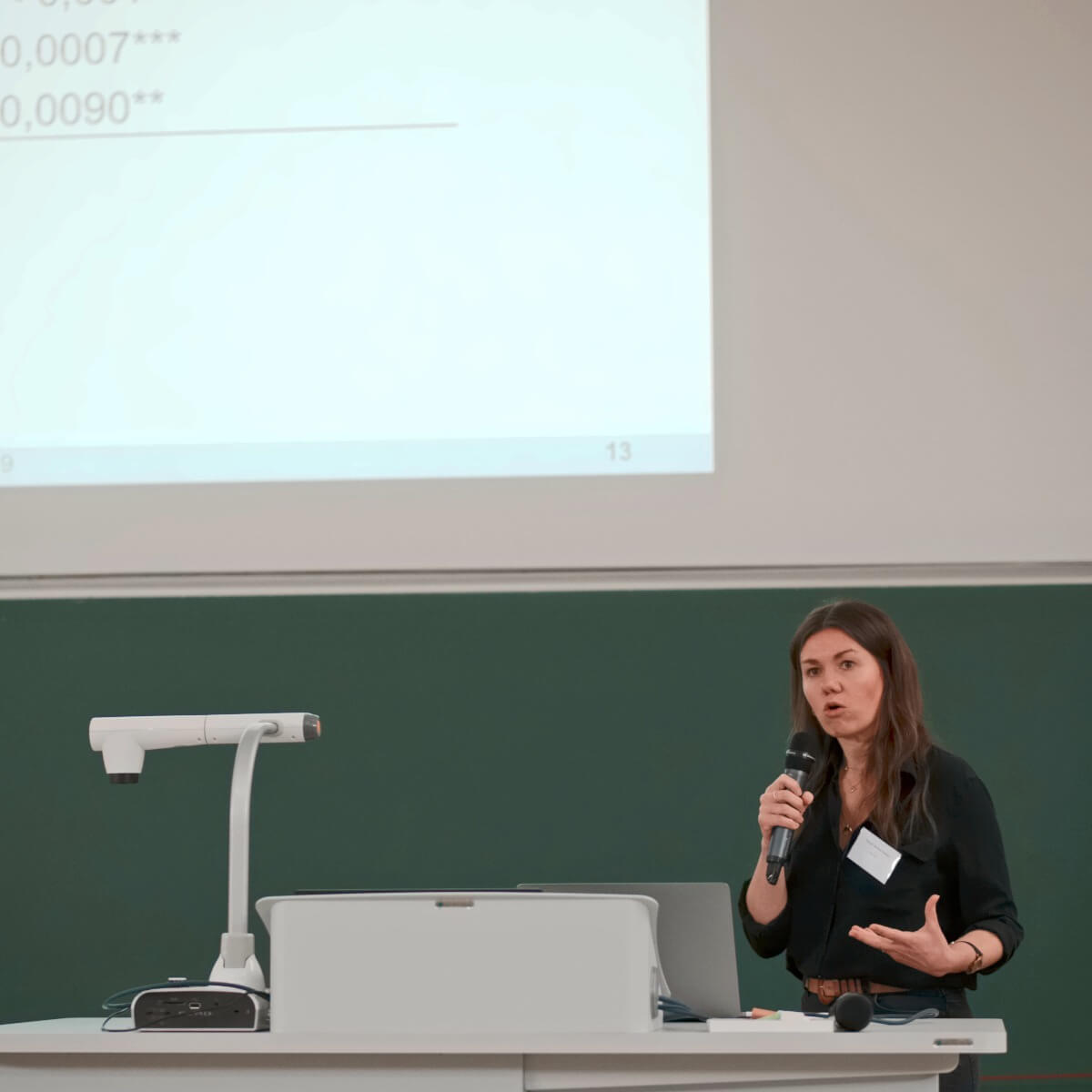
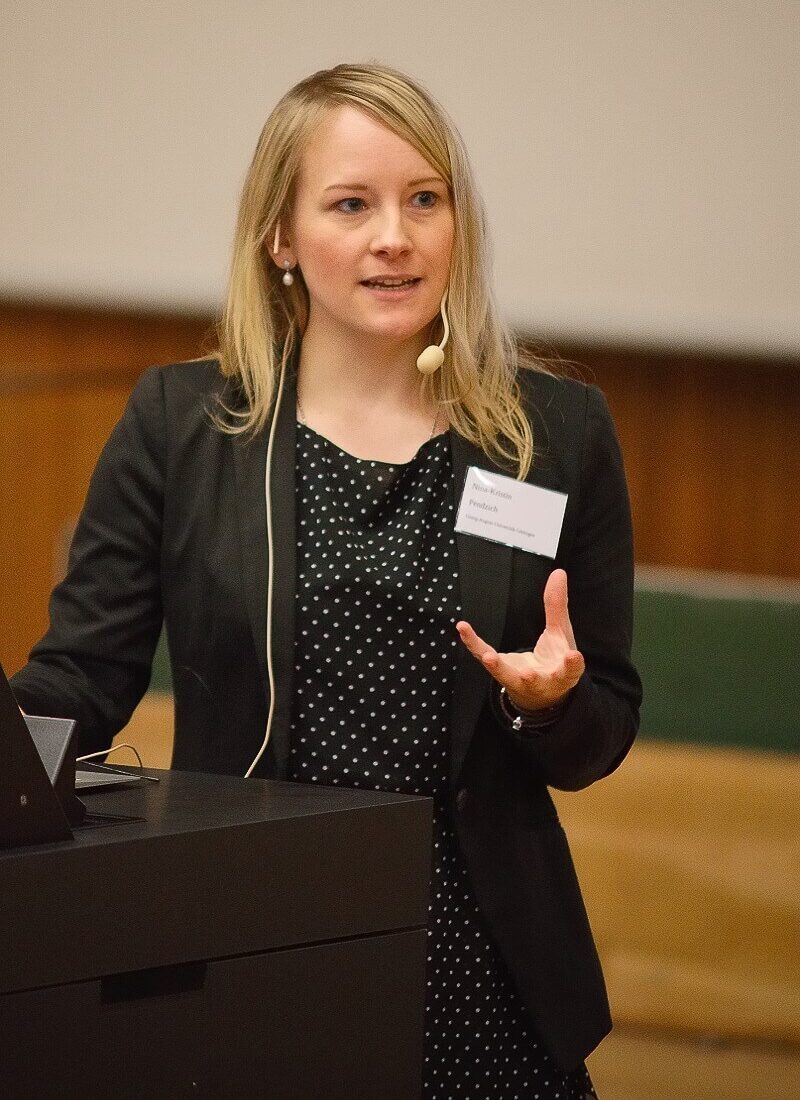
Nina-Kristin Pendzich (University of Göttingen)
Lexical Nonmanuals in German Sign Language: An empirical and theoretical investigation
With her dissertation, Nina-Kristin Pendzich makes an important contribution to our understanding of nonmanual components for the grammar of signed languages. In addition to the theoretical discoveries she makes, the dissertation is methodologically impressive: it raises the bar for carrying out, evaluating and implementing empirical studies in signed language linguistics.
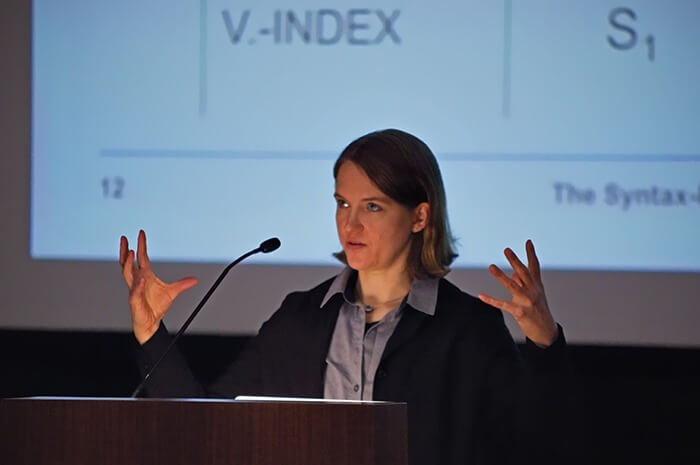
Tina Bögel (University of Konstanz)
The Syntax-Prosody Interface in Lexical Functional Grammar
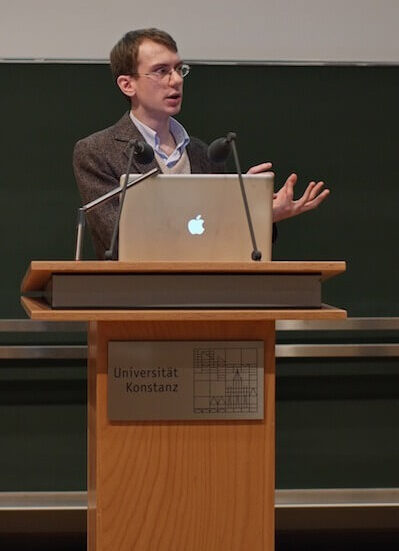
Manuel Križ (University of Vienna)
Aspects Of Homogeneity In The Semantics Of Natural Language
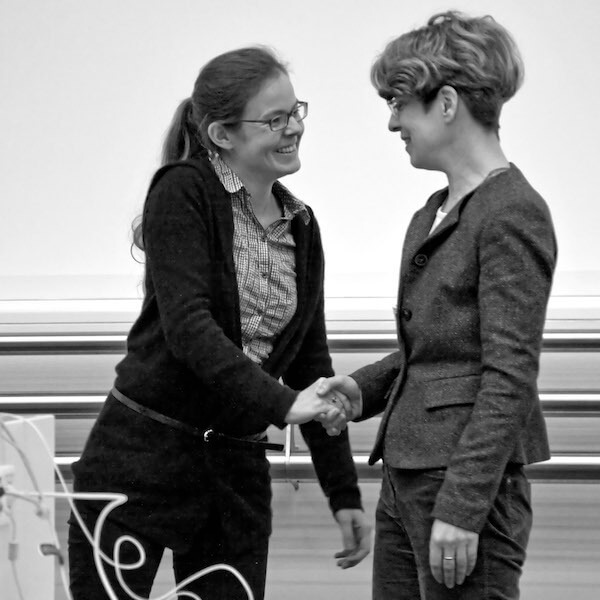
Uta Reinöhl (University of Cologne)
Grammaticization and Configurationality – The Emergence of Postpositional Phrases in Indo-Aryan
Uta Reinöhl receives the award for early career researchers for her doctoral dissertation on the topic of “Grammaticization and Configurationality – The Emergence of Postpositional Phrases in Indo-Aryan”. This dissertation intelligently combines methods and concepts from current linguistics to the fascinating question of the earliest origins of the Indo-Aryan languages. Beyond its linguistic import – a new theory of the origin of postpositions – the author illustrates how the precision tools of modern grammatical theory can be used to investigate processes of language change over long periods of time and in different language families, and to make new discoveries.
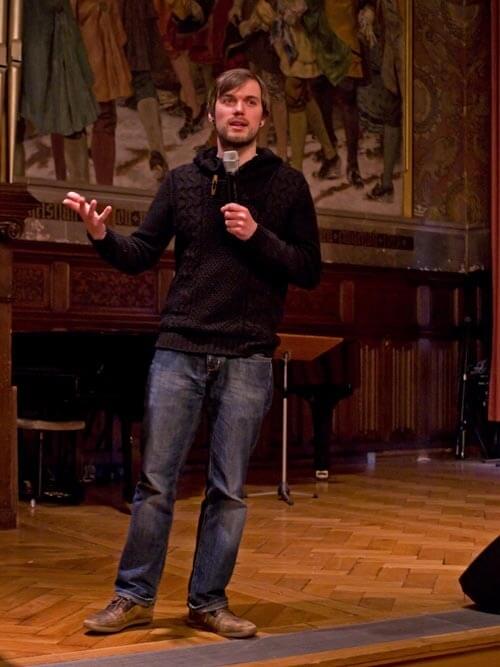
Daniel Gutzmann (Goethe University Frankfurt)
Use-conditional meaning: Studies in multidimensional semantics
Sebastian Bücking (University of Tübingen)
Kompositional flexibel – Partizipanten und Modifikatoren in der Nominaldomäne [Compositionally flexible: participants and modifiers in the nominal domain]
Sebastian Bücking receives an award for his doctoral dissertation “Compositionally flexible: participants and modifiers in the nominal domain”. This dissertation is a detailed combination of the assumptions of formal syntax and formal semantics in the nominal domain, clearly and effectively bringing the two together in a single analysis.
Diana Forker (University of Leipzig)
A Grammar of Hinuq
and
Annika Herrmann (University of Göttingen)
Modal Particles and Focus Particles in Sign Languages: A Cross-Linguistic Study of DGS, NGT and ISL
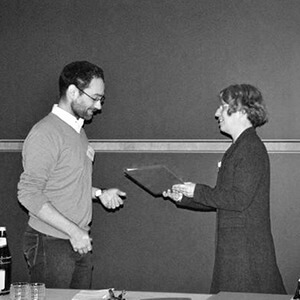
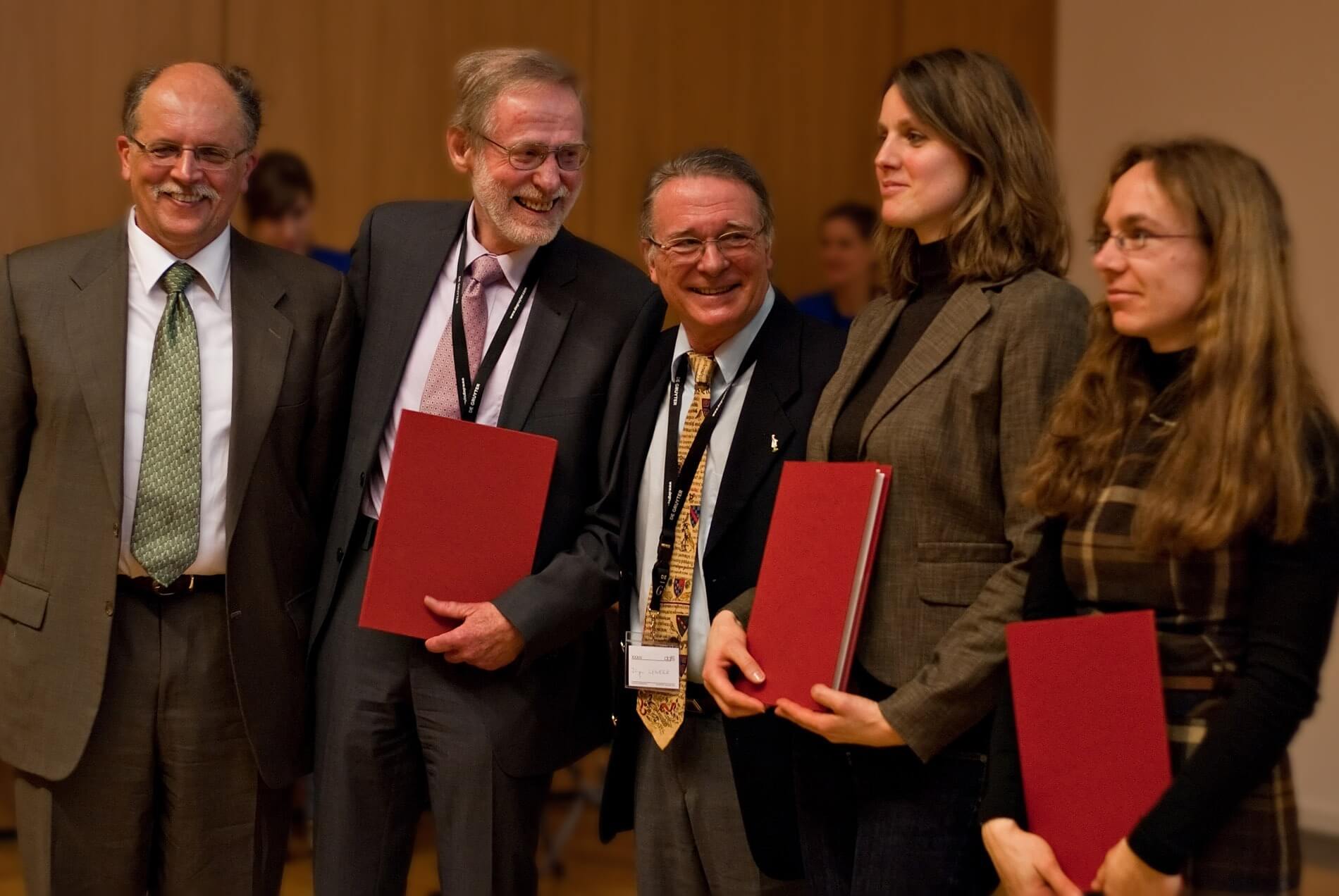
In 2012 we were able to bestow two awards for early career researchers.
Diana Forker receives an award for her doctoral dissertation “A Grammar of Hinuq”. This is an outstanding grammar of a previously underdescribed language, detailed and comprehensive, and is a shining example of linguistic field research.
Annika Herrmann receives an award for her doctoral dissertation “Modal Particles and Focus Particles in Sign Languages: A Cross-Linguistic Study of DGS, NGT and ISL”. This dissertation is an outstanding analysis of how various signed languages use modal particles and focus particles in comparison to spoken languages. In view of its solid empirical basis and its theoretical consequences, this dissertation is a shining example of linguistic theorizing.