DGFS SCIENTIFIC AWARD
With the Wilhelm von Humboldt Award for lifetime achievement in linguistics, the DGfS honours researchers whose oeuvre has substantially shaped the course of linguistics over many years.
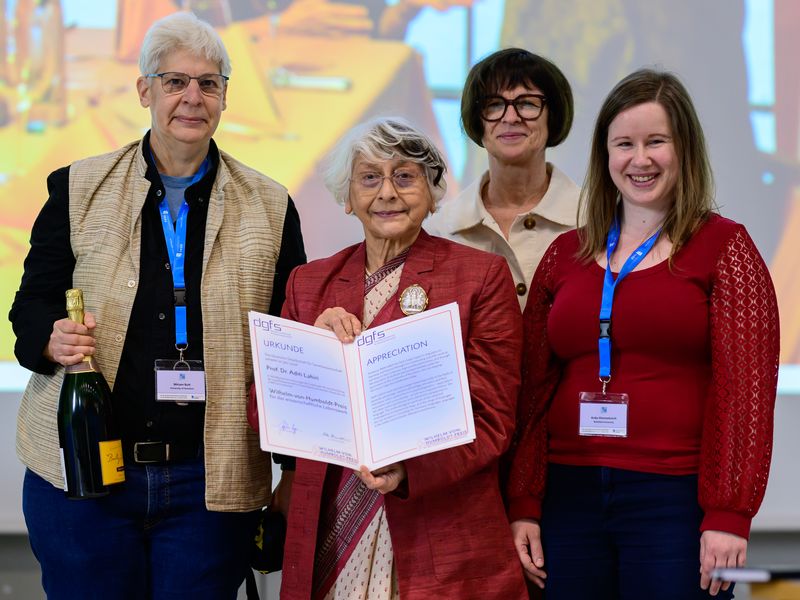
Prof. Aditi Lahiri
In 2026 the Wilhelm von Humboldt Award for Lifetime Achievement was awarded to Aditi Lahiri. Prof. Lahiri’s activities and publications have had a substantial impact on the development of linguistics in Germany and beyond for decades. Through her outstanding work, as demonstrated by numerous publications in major international journals and by her mentoring of students and early career researchers at the University of Konstanz who continue to shape Germany’s linguistic landscape to this day, she has consistently exerted a significant and long-term influence on linguistics in Germany.
Aditi Lahiri’s work has been particularly influential in the fields of prosodic phonology, morphophonology, phonetics and their interfaces, with a special focus on psycholinguistics – in particular language acquisition and processing – and linguistic theory.
Her work in these areas has taken both a synchronic and a diachronic perspective on language. The methodological spectrum of Aditi Lahiri’s empirical work is impressively broad, as is the range of languages on which she has worked, which include the Germanic languages, languages of the Indian subcontinent such as Bengali, as well as Mandarin and Korean.
Aditi Lahiri was a professor at the University of Konstanz from 1992 to 2007. Since then she has been teaching and researching at the University of Oxford. In Konstanz, Aditi was the lead organizer of the 21st DGfS annual conference, on the topic of language change.
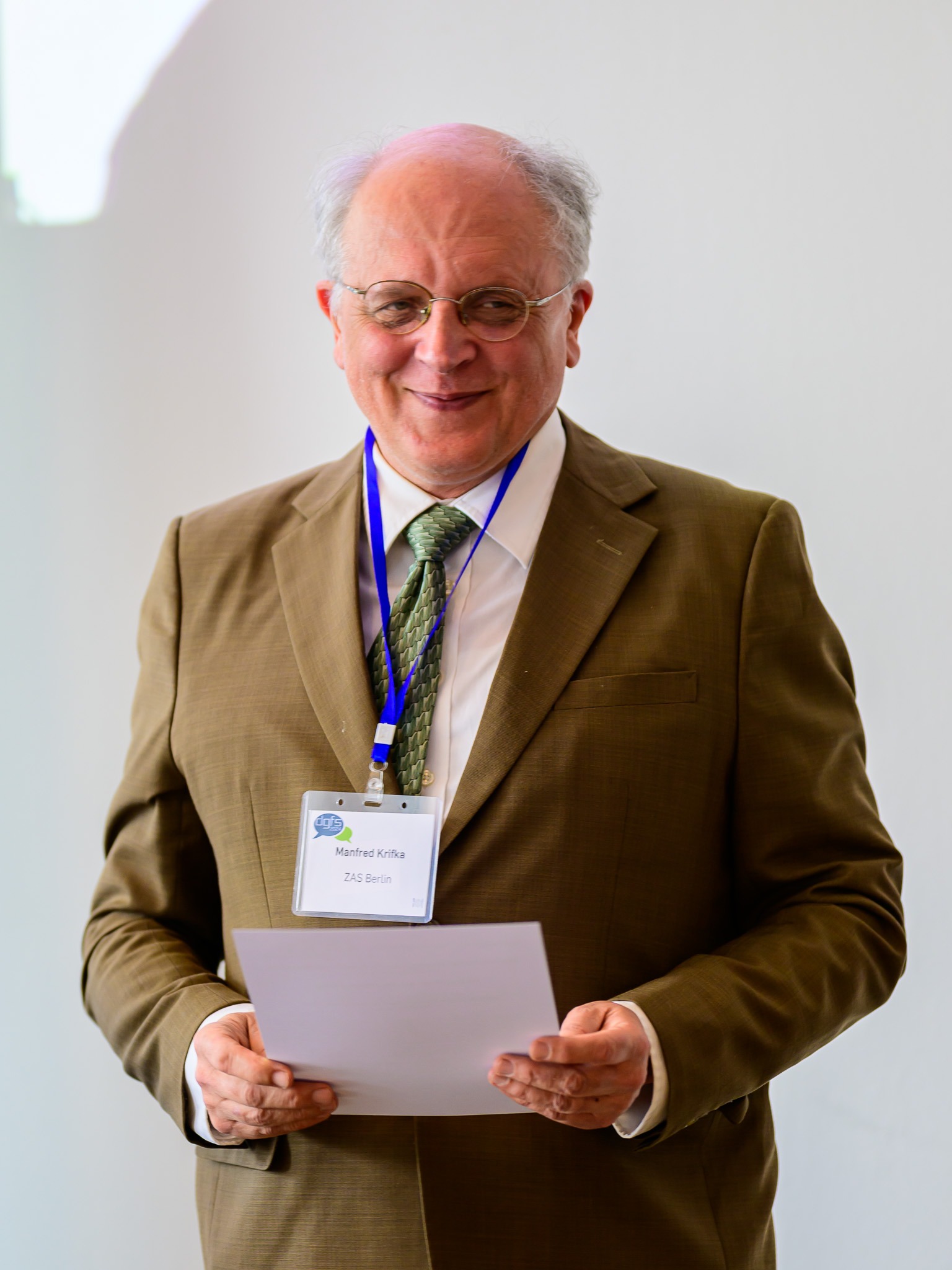
Prof. Manfred Krifka
On 28th February 2024, at its annual meeting at the University of Bochum, the DGfS awarded the Wilhelm von Humboldt Award for lifetime achievement in linguistics to Prof. Manfred Krifka. The laudatory speech was given by Sophie Repp.
Prof. Krifka studied at the University of Munich, where he developed a groundbreaking new approach to the analysis of telicity and nominal semantics in his doctoral dissertation. During the 1990s, Prof. Krifka developed an interest in focus and focus-sensitive particles, and developed this over the years into an innovative, inspiring and very influential approach to information structure. Another research topic in which Prof. Krifka has made game-changing contributions at the syntax-pragmatics interface is the analysis of speech acts as actions through which we make our commitments public and negotiate.
An early interest in non-European languages (first Swahili, then primarily Austronesian languages on Ambrym) led Prof. Krifka to another area in which he has made pioneering contributions: he demonstrated how formal semantics could be combined with fieldwork, creating new directions not only for field research but also for formal semantics.
Above and beyond these and many other impressively diverse linguistic achievements, we honour Prof. Krifka for his engagement in the landscape of linguistics in Germany. Following his dissertation, he made his way via Tübingen to the University of Texas at Austin, where he established his international career. After this, at the turn of the millennium, he decided to return to Germany, and to the Humboldt University of Berlin. Here Prof. Krifka also assumed leadership of the Leibniz-Centre General Linguistics (ZAS). It is largely thanks to his constant and focused efforts and to his constructive and cooperative engagement with various funding bodies that ZAS is now on firm footing as a Leibniz Centre and acts as a hub for internationally leading research in linguistics.
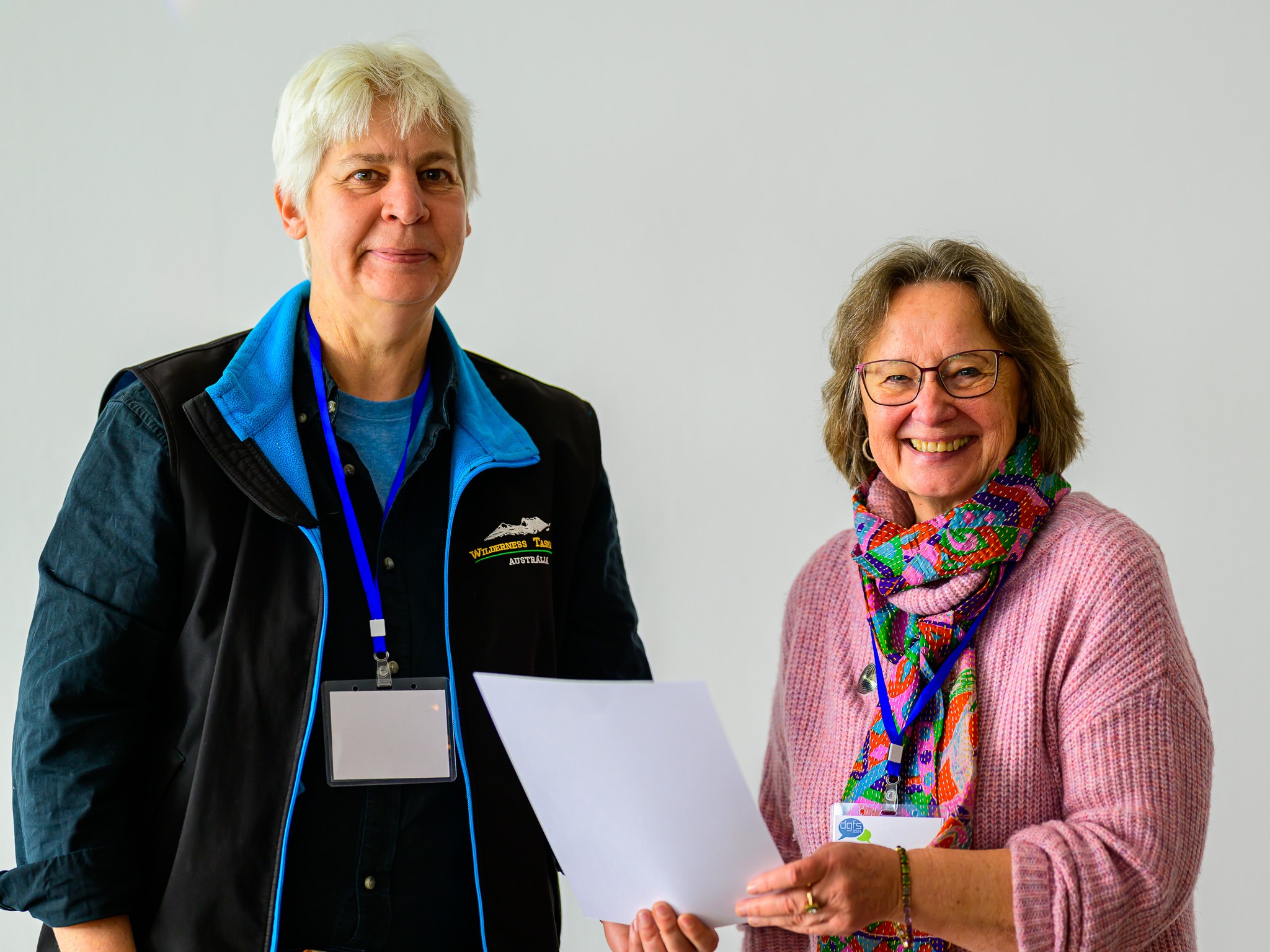
Prof. Rosemarie Tracy
On 23rd February 2022, at its annual meeting hosted by the University of Tübingen (online), the DGfS honoured Prof. Rosemarie Tracy with the Wilhelm von Humboldt Award for lifetime achievement in linguistics. The laudatory speech was given by Petra Schulz.
The awardee has changed the research landscape of German linguistics substantially through her consistent and energetic engagement over many years in the areas of child language acquisition and multilingualism. As a professor of English linguistics she did early research into topics in multilingualism and language pedagogy. In parallel, she carried out work both from the perspective of basic research and in the context of direct, practical, applied initiatives, cooperating closely with governmental organizations, financed by the many and considerable grants she was awarded from state and federal programmes. In the past twenty years, Prof. Tracy has devoted herself with renewed vigour to measures for the improvement of German schools and nurseries as regards language acquisition and multilingualism. For example, she co-developed a standardized test for language skills in the area of German as a second language, as well as a standardized test of the language teaching competence of schoolteachers. Prof. Tracy possesses the enviable ability to communicate linguistic findings and insights in such a way that they are accessible to a broad audience. For example, linguistic discoveries were communicated to the public in Mannheim via an outreach office for multilingualism, or in the form of easy-to-read books, dealing not only with topics in multilingualism and language acquisition but also with more controversial issues such as the requirement to speak German in the playground. It should be emphasized that all these activities – the targeted interventions, the provision of information, her personal intensive work with nurseries and schools – were informed by qualitatively excellent, innovative and groundbreaking basic research.
Rosemarie Tracy therefore deserves this award not only as an outstanding linguist who has significantly shaped the landscape of linguistics in Germany, but also because she has been an extremely clear and forceful advocate of the consequences of linguistic research for society.
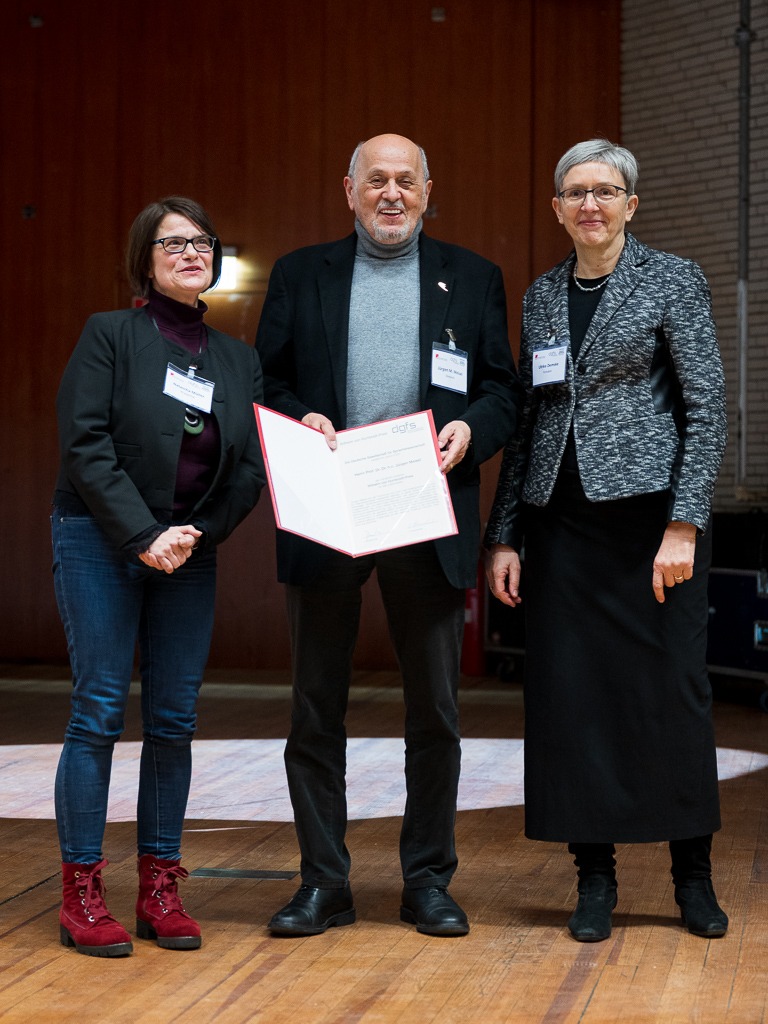
Prof. Jürgen M. Meisel
On 4th March 2020, at its annual meeting at the University of Hamburg, the DGfS awarded the Wilhelm von Humboldt Award for lifetime achievement in linguistics to Prof. Jürgen Meisel.
The award-winner has significantly shaped research into first and second language acquisition and multilingualism in Germany by means of a myriad of publications and projects. His combination of studies in language acquisition with questions of grammatical theory provided, and provides, a prime example for subsequent generations of researchers. His broad view of language acquisition, which on the one hand draws connections between second language acquisition and the formation of pidgins and creoles and on the other hand sheds light on the role of language acquisition and multilingualism in language change, is also remarkable. His diverse research activities at the University of Hamburg, where he worked for almost thirty years as Professor of Romance Philology, ultimately culminated in a Collaborative Research Centre (CRC) on Multilingualism situated there; this CRC definitively established multilingualism research as a societally relevant subdiscipline of linguistic research. His conviction that research should also seek out target audiences outside the academy can be seen in his most recent book publication, which provides advice for parents on bilingual acquisition.
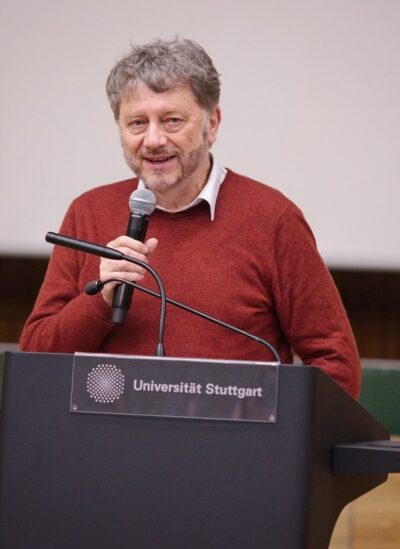
Prof. Wolfgang Klein
On 7th March 2018 at its annual meeting at the University of Stuttgart the DGfS awarded the Wilhelm von Humboldt Award for lifetime achievement in linguistics to Prof. Wolfgang Klein.
The awardee is a pioneer in many branches of linguistics. He works on second language acquisition, tense, intonation, text linguistics and computational linguistics. A linguistic polymath, his thinking has always transgressed established disciplinary boundaries.
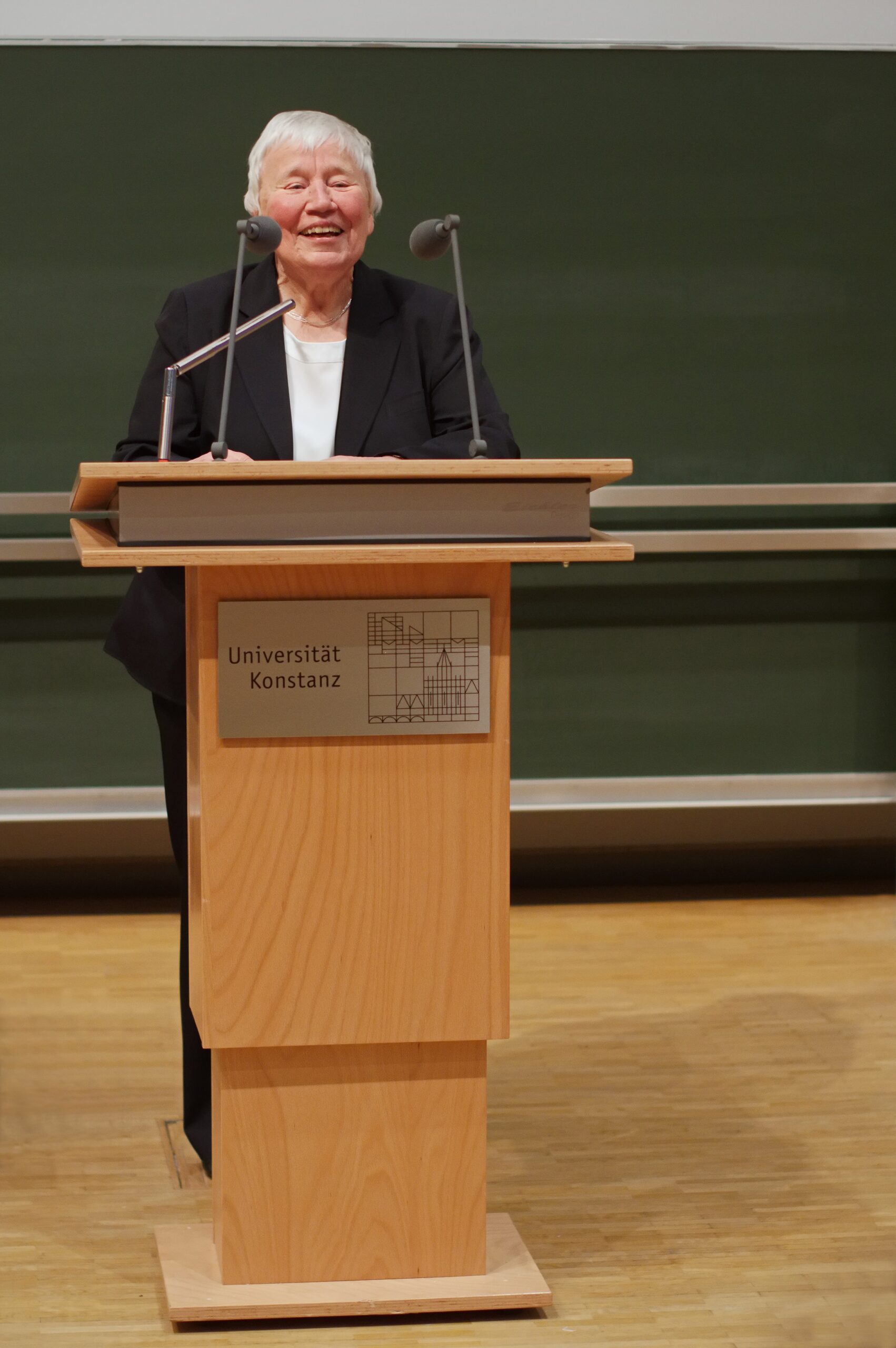
Prof. Marga Reis
On 24th February 2016 at its annual meeting at the University of Konstanz the DGfS awarded the Wilhelm von Humboldt Award for lifetime achievement in linguistics to Prof. Marga Reis.
Over several decades, Prof. Reis has decisively shaped linguistic research in Germany in the areas of syntax and the relationship between grammar and pragmatics. Above and beyond her own research and teaching, she has played a major part in advancing the interests of linguistics in Germany through various institutions and roles. For instance, she spent almost twenty years leading Collaborative Research Centres (CRCs) in linguistics. Her achievements in training a new generation of linguists are also remarkable, as attested to by the large number of her students who now occupy professorships. With this award the DGfS honours Marga Reis as an exceptional academic deserving of wide recognition both professionally and personally.
Prof. Dieter Wunderlich
On 5th March 2014 at its annual meeting at the University of Marburg the DGfS awarded the Wilhelm von Humboldt Award for lifetime achievement in linguistics to Prof. Dieter Wunderlich.
Prof. Wunderlich is one of the key figures responsible for the introduction of theoretical linguistics into Germany. His research covers the full range of linguistic topics. As a universalist in the best sense, he laid important foundations for the discipline. Through this work, above and beyond his own publications, he has stimulated much linguistic research: his ability to spark enthusiasm has energized many students, accompanied many research projects and inspired many colleagues.
Prof. Manfred Bierwisch
On 7th March 2012, at the 34th annual meeting of the DGfS in Frankfurt, the first ever Wilhelm von Humboldt Award for lifetime achievement in linguistics was awarded to Prof. Manfred Bierwisch.
With this award, the DGfS recognizes a researcher who has influenced virtually every area of linguistic and grammatical research in Germany like no other.
Manfred Bierwisch was born in Halle in 1930 and received his doctorate in Leipzig in 1961 for a study of the syntax of German that still enjoys authoritative status today. At the Central Institute for Linguistics of the Academy of Sciences of the GDR, under extremely difficult conditions, works were produced that had great influence in West Germany and beyond – for instance, his article on structuralism and papers on the phonology, prosody and morphology of German, but also on the theory of speech acts, on psycholinguistics, and on the relationship between linguistic structure and music. In developing the theory of two-level semantics, Bierwisch also made important contributions to research on meaning, e.g. to our understanding of metaphorical and metonymic language use and to research into the meaning of adjectives, prepositions and comparative constructions.